Understanding Elmendorf Tear Strength
The demand for reliable material testing methods has significantly increased in recent years, especially for industries dealing with textiles and packaging materials. One such method that stands out is the elmendorf tear strength test. This technique provides a precise evaluation of the force required to propagate a tear in materials such as fabrics, plastics, and paper, making it an essential tool for quality control and product development across various sectors.
What is Elmendorf Tear Strength?
Elmendorf tear strength refers to the ability of a material to withstand tearing. It is measured by the force needed to initiate and continue a tear in a sample. The test involves a pendulum that swings down from a fixed height, tearing a notched specimen, and the energy lost during this action translates directly to the tearing strength of the sample being tested.
Significance of Tear Strength in Material Testing
Tear strength is a critical parameter in quality assurance for manufacturers, especially in industries such as textiles, packaging, and construction materials. Understanding a material’s tear resistance helps manufacturers select appropriate materials for their applications, ensuring durability and performance. For instance, in the textile industry, high tear strength indicates a fabric’s ability to endure stress and wear, directly impacting product longevity.
Overview of Relevant Testing Standards
Multiple standards govern the testing of tear strength, including ASTM D1922, ISO 13937-1, and GB/T 3917. These standards offer guidelines on sample preparation, testing procedures, and equipment specifications, ensuring that results are consistent and comparable across different laboratories and testing environments.
The Mechanics of the Elmendorf Tear Tester
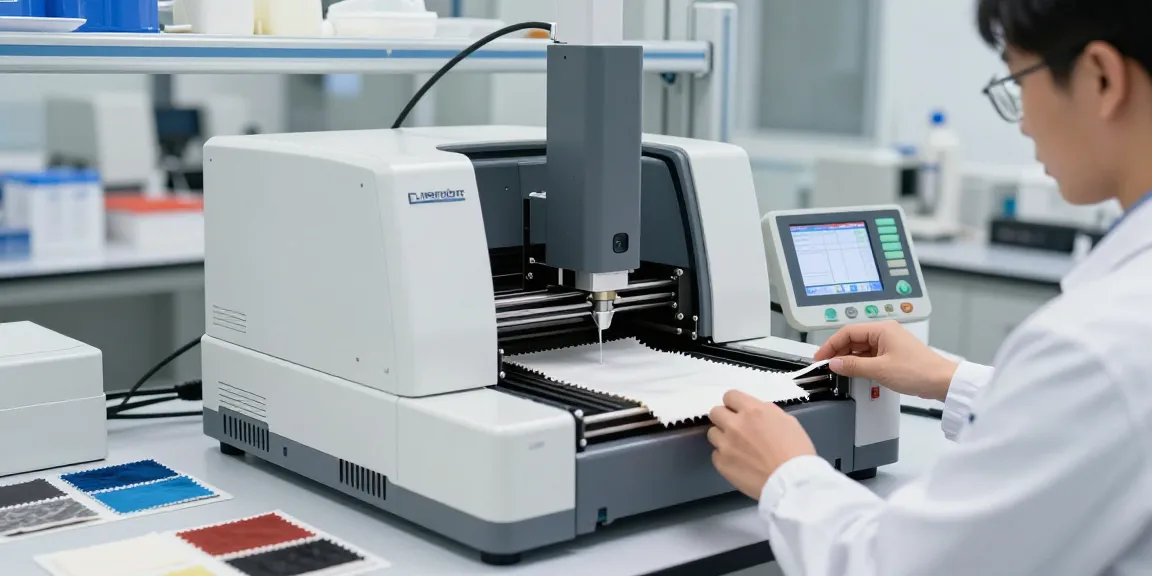
The Elmendorf tear tester operates on a simple yet effective principle involving a pendulum mechanism. It is designed to automatically measure and compute the tearing strength of various materials, providing an efficient and user-friendly experience.
How It Works: The Pendulum Method
In the Elmendorf tear test, a specimen is clamped between two supports, with a notch cut into it to initiate tearing. The pendulum is released, swinging downward to impact the sample. The energy lost by the pendulum during the tearing process is recorded and equated to the tear strength of the material. This method ensures a precise measurement of tear resistance, contributing to the reliability of the testing process.
Setup and Calibration Procedures
Setting up the Elmendorf tear tester is straightforward. The operator must ensure that the specimen is properly notched and securely clamped. Calibration is essential to ensure accuracy; typically, this involves adjusting the tester to account for variations in the pendulum’s swing or environmental factors. Routine calibration checks can prevent measurement discrepancies and ensure compliance with relevant testing standards.
Common Challenges and Solutions in Operation
While the Elmendorf tear tester is designed for simplicity, operators may encounter issues such as improper specimen preparation or misalignment of the pendulum. Training staff on proper operation techniques and conducting regular maintenance checks on the equipment can mitigate these challenges. Additionally, leveraging digital controls and automation features available in modern testers can enhance operational efficiency.
Comparing ElmenGuide with Traditional Testing Methods
The introduction of automated testing devices like the ElmenGuide Elmendorf Tear Tester represents a significant advancement over traditional testing methods. Automation provides consistent results, minimizes human error, and reduces the time required for testing.
Advantages of Automation in Tear Testing
Automated systems can adjust testing parameters based on sample weight and dimensions, ensuring accuracy in measurement without manual input. This capability not only speeds up the testing process but also enhances reproducibility, which is crucial for manufacturers needing to adhere to strict quality standards.
Cost-Benefit Analysis: Traditional vs. Automated Testing
While traditional methods might have lower upfront costs, the long-term benefits of automated tear testing systems often outweigh initial investments. Reduced labor costs, fewer human errors, and faster turnaround times contribute to overall cost savings. Additionally, the high precision offered by automated systems can lead to enhanced product quality and fewer returns or defects.
Case Studies: User Experiences and Feedback
Feedback from users of the ElmenGuide Elmendorf Tear Tester demonstrates its reliability and efficiency in various industrial applications. For instance, textile manufacturers report improved consistency in tear strength results, allowing for better quality control and reduced fabric wastage during production. Such testimonials highlight the importance of investing in advanced testing technologies for maintaining competitive advantage in the market.
Applications of Elmendorf Tear Strength Testing
Elmendorf tear strength testing is applicable in multiple industries, including textiles, packaging, and construction materials. The versatility of this test makes it a crucial part of the quality assurance process in these sectors.
Industries That Rely on Tear Testing
- Textile Industry: Used for evaluating the durability of fabrics.
- Packaging Sector: Tests plastic films and paper for strength and resilience.
- Construction Materials: Measures the tear resistance of various composites and membranes.
Specific Use Cases in Textile and Paper Industries
In the textile industry, the Elmendorf tear test helps manufacturers assess fabric durability, particularly for apparel and upholstery. In the paper industry, it evaluates the tear resistance of wrapping and packaging materials, ensuring they can withstand handling and transportation conditions without failure.
Future Trends in Material Testing Applications
The evolution of material testing is heavily influenced by advancements in technology. Future trends may include increased integration of smart technologies, remote monitoring capabilities, and enhanced data analytics to help manufacturers derive insights from testing results more efficiently.
Integrating Technology with Testing Processes
Innovative technologies are transforming the landscape of material testing, particularly through IoT integration and data management systems. These advancements enhance the functionality and usability of testing equipment, making processes more efficient.
IoT Innovations in Testing Laboratories
IoT-enabled tear testers can provide real-time data monitoring and reporting. Operators can receive alerts about maintenance needs, track testing statuses, and access historical data, improving the decision-making process in quality control.
API Integrations with ERP and LIMS Systems
Modern testing equipment, including the ElmenGuide, can seamlessly integrate with existing ERP and LIMS systems. This capability allows for streamlined data flow between testing and production departments, enhancing collaboration and ensuring compliance with industry standards.
Preparing for Future Developments in Material Testing
Staying ahead in material testing requires an understanding of emerging technologies and practices. As industries evolve, manufacturers should be prepared to adapt their testing processes, investing in the latest equipment and methodologies to maintain product integrity and customer trust.
What is the internal tearing resistance of paper Elmendorf type method?
The internal tearing resistance of paper can be assessed using the Elmendorf method, where the test measures the force required to propagate a tear in paper samples. This measurement is particularly important for applications involving multilayer materials in packaging.
How do you calculate tear strength?
Tear strength is calculated by measuring the force required to continue a tear through a material divided by the thickness of the sample. This metric helps in understanding the resilience of different materials under stress.
What is a high tear strength?
High tear strength refers to the capability of a material to resist tearing. Materials with high tear strength are crucial in applications where durability is essential, such as heavy-duty fabrics and packaging materials.
What are the common materials tested using Elmendorf tear testers?
Common materials tested with Elmendorf tear testers include woven fabrics, plastic films, various paper types, and laminated materials. Each of these materials requires specific testing conditions to ensure accurate results.
How do humid conditions affect tear strength testing?
Humidity can significantly impact tear strength measurements, as moisture absorption may alter the physical properties of materials, especially fabrics and papers. Therefore, it is crucial to conduct tests in controlled environmental conditions to achieve reliable results.